Parental alienation is one of the most painful things a parent can experience: the slow, often deliberate erosion of your relationship with your own child by the actions of the other parent.
It is also one of the most underrecognized. By the time most parents realize alienation is happening, the damage is significant and the path back is long. The window for early intervention closes quickly — often before the targeted parent even understands what they're seeing.
This article is meant to help you recognize the signs early, distinguish alienation from normal child behavior, and understand what you can and cannot do about it.
What parental alienation actually is
Parental alienation involves one parent unjustly influencing a child to reject the other parent. It is not the same as a child having normal age-appropriate complaints about a parent. It is not the same as a child preferring one parent at certain ages. It is a specific dynamic in which one parent — sometimes consciously, sometimes not — systematically undermines the child's relationship with the other.
The behaviors range from overt to subtle. On the overt end: openly disparaging the other parent to the child, blocking communication, refusing to facilitate contact, making false allegations. On the subtle end: sighing when the other parent is mentioned, sending the child off with a tone of pity, making the child feel guilty for enjoying time with the other parent, "checking in" with the child constantly during their other parent's time.
Subtle alienation is often more damaging than overt alienation, because it's harder to identify and harder to prove. The child absorbs the message — that loving the other parent is disloyal — without ever being told it directly.
Why early recognition matters so much
Alienation works on a child's developing identity. The longer it operates, the more the child internalizes the alienating parent's view of the targeted parent — until the child themselves becomes the active agent in the rejection.
In severe cases, this produces what's clinically called "parental alienation syndrome," where the child refuses contact with the targeted parent altogether, expresses contempt or hatred toward them, and rationalizes this with vague or borrowed reasons. By the time a case reaches that point, reunification is extremely difficult and requires professional intervention.
Early intervention — recognizing the dynamic before it has fully taken hold and responding strategically — has dramatically better outcomes than late intervention. Which means recognizing the signs early matters enormously.
Subtle early signs
The earliest signs are easy to miss because they look like ordinary parenting friction. Watch for these patterns, especially when they appear together or escalate over time:
Resistance to transitions
The child becomes increasingly anxious or upset about going to your house. This may begin subtly — a quieter mood at handoff, more reluctance to leave the other parent — and gradually escalate. Some resistance during exchanges is normal. Persistent, escalating resistance, particularly when the child seems fine once they're with you, is suspicious.
The child reports things you didn't say or do
Your child mentions that you said something hurtful, did something you didn't do, or feel something you don't feel. When you ask about it, they're vague or shut down. The "memory" comes from somewhere else.
Use of adult vocabulary
The child uses words and phrases that don't sound like a child their age — "controlling," "manipulative," "narcissistic," "abusive." This vocabulary is being introduced from somewhere. Children don't develop these terms organically.
The borrowed grievance
The child raises issues that aren't their issues — financial complaints, complaints about your relationship history, complaints about your character. A nine-year-old worrying about whether you pay child support on time is not a nine-year-old expressing nine-year-old concerns.
Sudden, unexplained shifts
A previously affectionate child becomes cold without an identifiable cause. A child who was excited to see you starts dreading visits. The shift often correlates with major events — a new partner of yours, a major court hearing, the holidays — when the alienating parent's anxiety is heightened.
Pity from the other parent
The other parent's tone toward the child during exchanges suggests pity for what the child is "about to endure." Comments like "I'll see you soon, sweetie, just hang in there" or excessive worry about whether the child will be okay at your house. These convey to the child that going with you is hard or unsafe.
Excessive contact during your time
The other parent contacts the child constantly during your parenting time — multiple texts per day, calls, video chats — far beyond what's needed for genuine connection. This signals to the child that your parent doesn't trust this environment, and reinforces the child's pull back to the alienating parent.
The "secret" alliance
The child develops an air of conspiratorial closeness with the other parent — sharing secrets they won't tell you, having a private inside-language about your home, treating you as an outsider in your own family.
Stronger signs the dynamic is escalating
If the early signs go unaddressed, the dynamic intensifies. These behaviors indicate more advanced alienation:
Open disparagement of you in front of the child
The other parent criticizes you to the child directly — your character, your parenting, your decisions, your home, your new partner. The child reports these comments back to you, sometimes proudly, sometimes with confusion.
Interference with communication
You can't reach your child during the other parent's time. Calls go unanswered. Messages aren't delivered. Promised video chats don't happen. The other parent claims the child "doesn't want to" talk.
Schedule erosion
Your scheduled time gets reduced through escalating obstacles. The child has activities during your time. The child is "sick" on transition days. The child is "too tired" or "doesn't want to go." Each individual incident has a plausible explanation. The pattern is the giveaway.
Unilateral decisions
The other parent makes major decisions about the child without consulting you — switching schools, starting therapy, scheduling activities, traveling. They present these as "what the child wants" or "what's best for them" and treat your input as optional or irrelevant.
The child's "independent" rejection
The child starts independently expressing reluctance about you using language that mirrors the other parent's. They may say things like "I just don't want to go," "I don't feel safe there," "you don't really love me." When pressed, they can't articulate specific reasons — or the reasons they give don't match anything that's actually happening.
False allegations
In severe cases, the alienating parent makes formal allegations — to schools, doctors, child protective services, the court — that are exaggerated or fabricated. These are devastating to defend against and are designed to remove or restrict your access to the child.
What you can do
Recognizing alienation is one thing. Responding to it without making things worse is another. Some principles:
Don't retaliate
The instinct to disparage the alienating parent in return is overwhelming. Resist it completely. You will not "balance the scales" — you will confirm the child's emerging belief that adults are unsafe and that they have to choose sides. Stay the parent who doesn't put them in the middle.
Don't interrogate the child
When your child reports something concerning, the urge to dig is powerful. Don't. Probing questions about the other parent's behavior, the other parent's home, or what the other parent says about you puts the child in an impossible position. You become another adult demanding the child take sides.
Be the parent the child can come back to
This is the hardest and most important. The targeted parent's job, in the long run, is to be a safe, calm, loving, predictable presence — even when the child is being difficult, even when the rejection feels personal, even when years go by. The child often returns, sometimes as adults, sometimes earlier. The door must remain open.
Document everything
Every cancelled visit. Every disparaging comment the child reports. Every interfering message. Every time you can't reach the child. Every borrowed grievance. Detailed, contemporaneous records are how alienation gets recognized in court — without them, it's just your word against theirs.
Get professional help — the right kind
Generalist family therapists often make alienation worse, because they're trained to find balance and validate both perspectives. In alienation cases, that's exactly the wrong approach — it confirms to the child that the targeted parent is "part of the problem." Look specifically for therapists trained in alienation dynamics and reunification work. Ask directly about their experience with high-conflict cases involving suspected alienation.
Talk to a family law attorney early
Alienation is a legal issue. The legal remedies are imperfect — courts are slow, evaluators vary in quality, and outcomes are unpredictable — but they are sometimes the only thing that interrupts the dynamic. An attorney experienced in high-conflict cases can advise on whether legal intervention is appropriate, when, and what to ask for.
Watch for the false-allegation defense
In some severe cases, an alienating parent will preemptively accuse the targeted parent of alienation as a tactic. If you find yourself accused of alienating behaviors you haven't engaged in, document your actual behavior carefully. Stay calm in court. The pattern of who is actually alienating usually becomes visible to professionals who look closely.
What not to do
A few common mistakes worth naming:
- Don't cave on time with the child to "keep the peace." Voluntarily reducing your parenting time signals that the child's rejection is acceptable, and once you give up time, getting it back is much harder.
- Don't try to convince the child the other parent is lying. You'll position yourself as the parent who is attacking the other, which is exactly the dynamic you're trying to break.
- Don't promise the child you'll "make it stop" or "fix it." You can't. What you can do is remain present, loving, and steady. Promises you can't keep damage trust.
- Don't take the child's words personally during the worst of it. The cruelest things alienated children say to their targeted parents are often borrowed or scripted. Your child is in pain. The pain is not really about you.
The long view
Parental alienation is one of the worst experiences a parent can endure. There is no easy answer. There is no quick fix. The legal system handles it imperfectly, the therapy field is uneven, and the alienating parent is often very good at what they do.
What you can control is yourself. Stay healthy. Stay regulated. Build the best version of your life and your home. Maintain your integrity. Document carefully. Get the right professionals on your team. Don't retaliate. Don't disengage. Don't give up.
Children grow up. Patterns become visible. Truth, eventually, has a way of surfacing. The targeted parent who weathers the storm with their integrity intact often gets their child back — sometimes years later, sometimes after the child has gone through their own pain and started to see the dynamic clearly. Your job, today, is to make sure you are still there, still loving, still safe, when that happens.
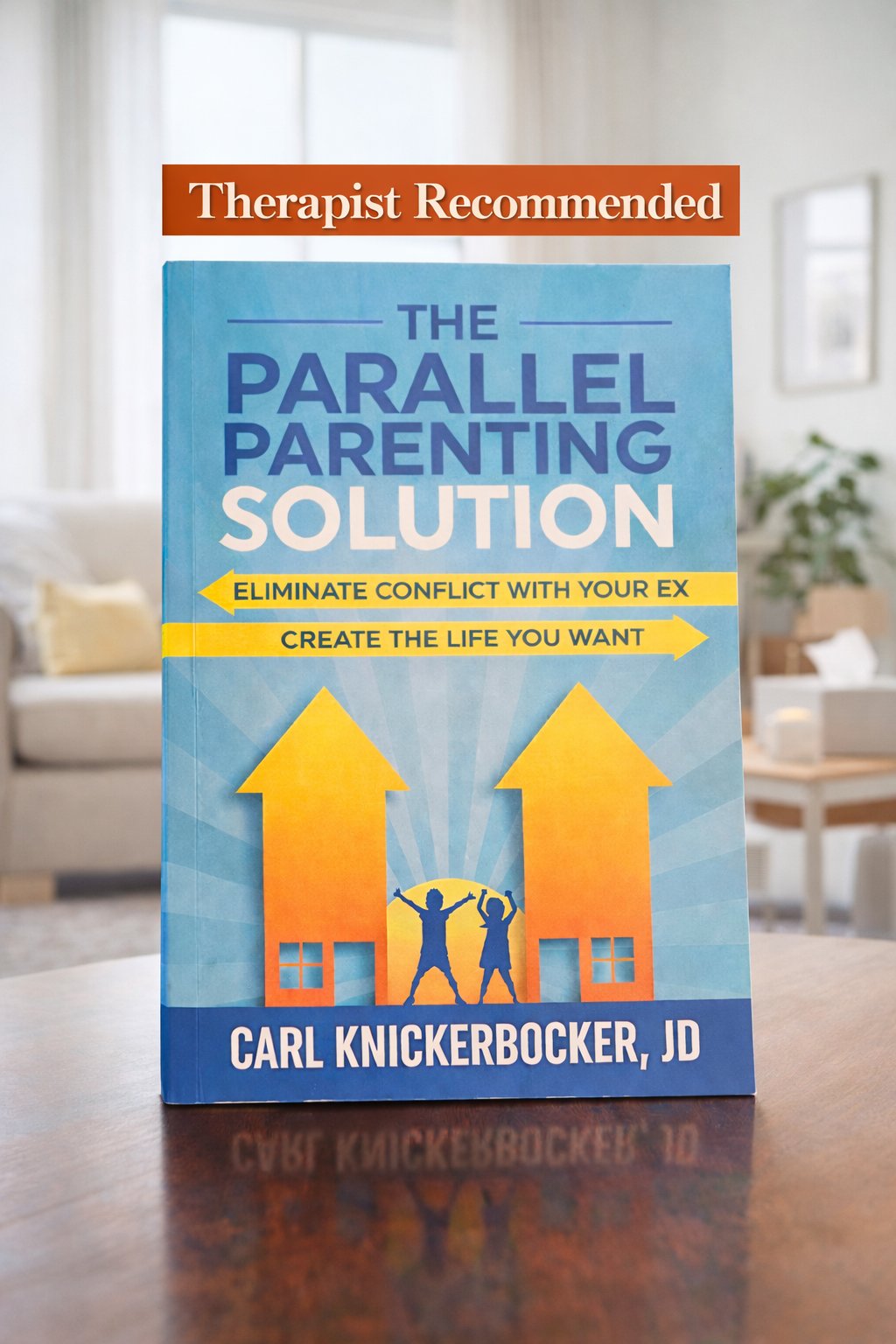
Get the complete framework for high-conflict cases.
This article draws from Family Court Solutions and The Parallel Parenting Solution. Together they give you the legal, practical, and emotional toolkit for the long road of dealing with alienation.
Get the Book