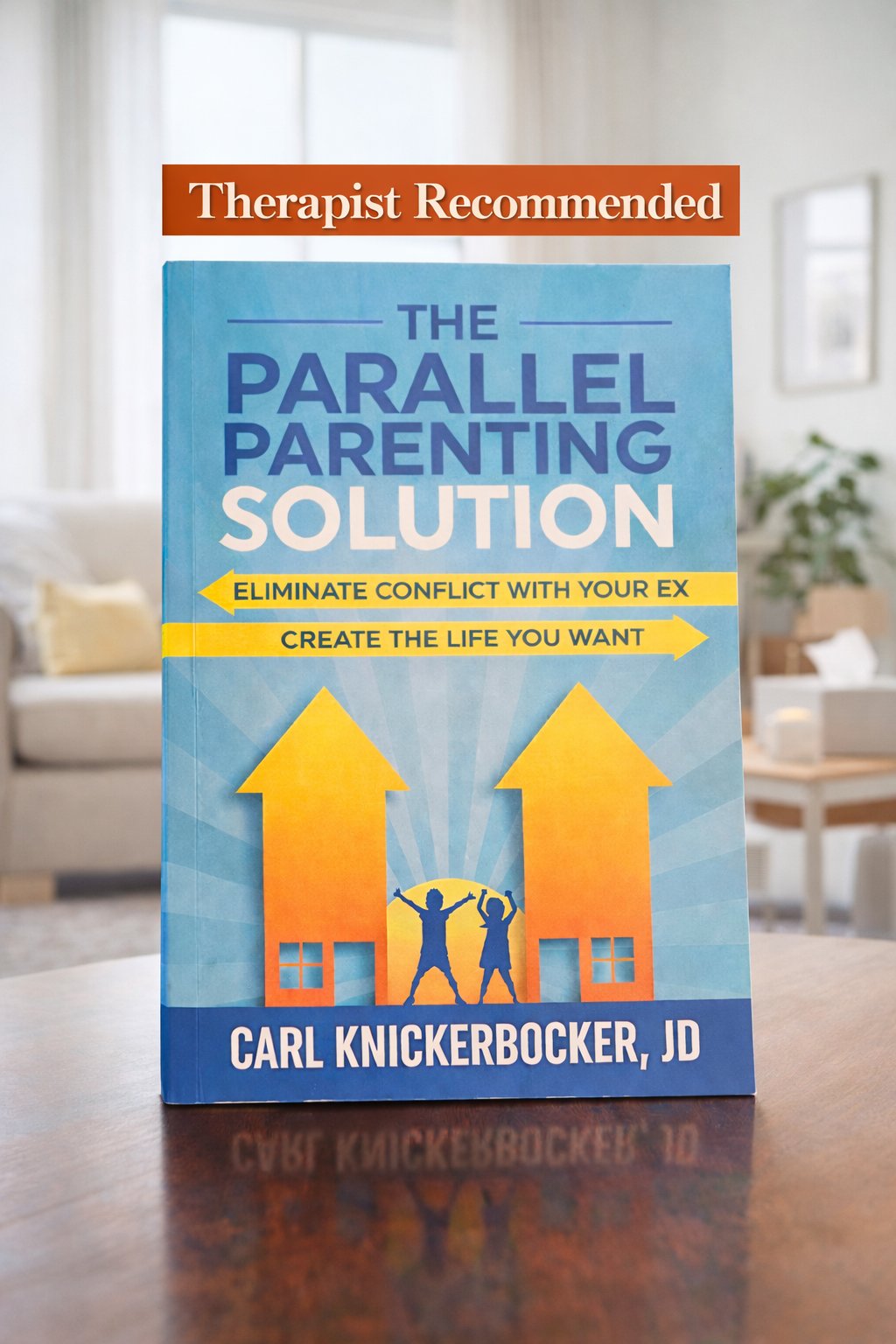
100 exercises designed to take parallel parenting from concept to daily practice. The official companion to the #1 bestseller — built for the parents doing the actual work.
The official companion to The Parallel Parenting Solution — 100 exercises designed for self-reflection and growth, with prompts to help you process emotions, gain clarity, and take control of your situation.
The original Parallel Parenting Solution lays out the framework. The principles, the strategies, the worldview shift. For most readers, that's enough — they put the book down and start applying it.
For others — and there are a lot of you — finishing the book raises a different question. How do I actually become this person? How do I stop responding emotionally to bait I've been trained for years to respond to? How do I build a vision for my life when I've been in survival mode for so long I don't remember what I want? How do I do the slow internal work that turns a strategy into a way of living?
That's what the workbook is for. Each exercise is a guided self-examination — pulling apart a specific dynamic, behavior, trigger, or assumption you've been carrying, and asking you to look at it directly. They take time. They're meant to.
Organized around the lived experience of high-conflict coparenting — not abstract theory.
Reflecting on the relationship's beginning, the patterns that emerged, the early warning signs you may have missed, and the dynamics that carried into coparenting.
Identifying high-conflict behaviors, mapping the cycles of escalation, naming the manipulation tactics you've been on the receiving end of.
Honest assessment of how you've responded — what worked, what didn't, where you got pulled in, where you held the line.
Specific emotional triggers, what they cost you, and the early-warning signals that mean you're about to react instead of respond.
The grief, anger, fear, and shame that don't go away just because the marriage did — and how to actually move them rather than carry them.
Defining the life you actually want — values, priorities, daily practices, the home you want to build. Strategy One in concrete form.
Drafting and refining real responses to high-conflict messages. What to say, what to ignore, how to keep it brief without sounding cold.
Identifying where boundaries are missing, drafting them in clear language, and planning how to enforce them when (not if) they're tested.
Looking forward — what you want your life to look like in one year, five years, ten. How parallel parenting fits into the bigger picture.
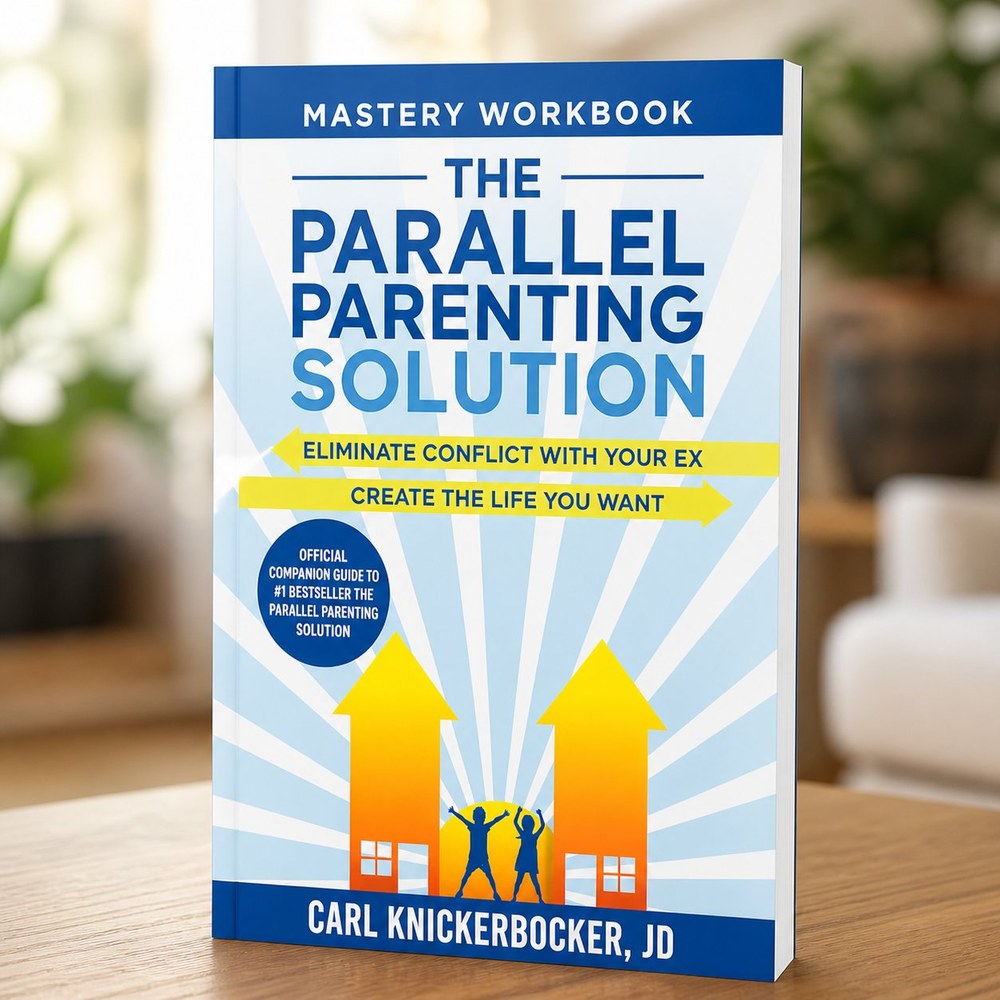
The recommended pace is one exercise per week — set aside an hour, work through it, sit with what comes up. Two years of structured weekly reflection.
That's the recommendation. Not the rule. Use it however serves you. Burn through ten exercises in a weekend if you're in a moment of clarity. Skip around to whichever one fits the question you're sitting with right now. Spend a month on one exercise if it cracks something open.
Each exercise has the same structure: a prompt, a series of guided steps, and space (or instruction) to write down what you find. They build on each other but don't have to be done in order.
If you're working with a therapist who's familiar with high-conflict coparenting, the workbook also doubles as session material — bringing a completed exercise to a session can take you further than 50 minutes of unstructured talk.
Reading the book gives you the map. The workbook is how you actually walk it.— On using the Mastery Workbook
The original book is a 9-chapter read-through. The workbook is a 100-exercise practice. Together, they're the whole system.
If you'd like to work through the framework with professional guidance — legal coaching, consulting, or representation — Carl's law firm offers consulting tailored to high-conflict situations.
Visit Carl Knickerbocker Law →